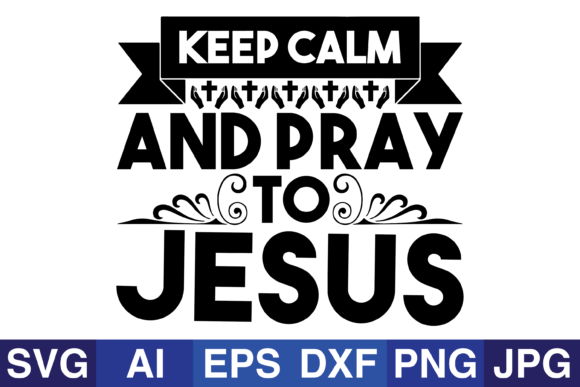
Keep Calm and Pray to Jesus: A Practical Guide to Faith-Focused Resilience
In an era filled with self-improvement strategies, mindfulness apps, and mantras of self-reliance, the phrase Keep Calm and Pray to Jesus stands apart. It borrows the stoic endurance of the original wartime slogan but redirects the source of composure outward and upward. Rather than relying solely on internal grit, it introduces a divine relationship as the anchor for peace. For adults navigating career pressures, family responsibilities, or personal crises, this approach offers a specific framework for managing stress. But how does it compare to other coping tools, and what are its real strengths and limitations? This article offers a balanced evaluation to help you determine where it fits into your life or the lives of those you support.
The Core Distinction: Resilience vs. Reliance
The original "Keep Calm and Carry On" is a call to self-contained endurance. It implies that you already possess the resources needed to push through difficulty. Keep Calm and Pray to Jesus shifts this premise entirely. Instead of "I can handle this," the underlying message is "I know who handles this, and I am entrusting it to Him."
This distinction has psychological and spiritual weight. For many, the pressure to remain calm and solve everything independently is a secondary source of anxiety. By introducing prayer, the phrase allows for an active release of control. You are not giving up; you are transferring the burden. This can reduce the exhaustion of hyper-responsibility, a common issue for high-achieving adults. However, this benefit depends entirely on the user's worldview. For someone without a Christian faith, the instruction to "pray to Jesus" may feel irrelevant or even off-putting. The strength of the approach is its specificity; its limitation is its requirement of a pre-existing belief.
Comparing Coping Mechanisms Across Worldviews
To evaluate Keep Calm and Pray to Jesus fairly, it helps to place it alongside other common stress-management tools.
Secular Mindfulness and Stoicism
Secular mindfulness focuses on non-judgmental awareness of the present moment. It is a powerful tool for regulating the nervous system and observing thoughts without being consumed by them. Stoicism, meanwhile, emphasizes distinguishing between what you can and cannot control. Both are effective and widely accessible.
- Strengths of Mindfulness/Stoicism: Universally applicable, evidence-based for reducing anxiety, requires no specific faith.
- Tradeoffs: Can feel isolating during deep suffering. They focus on internal management of emotions rather than relational comfort.
- Comparison: Where mindfulness says, "Observe the feeling and let it pass," Keep Calm and Pray to Jesus says, "Bring the feeling to a person who can help." For individuals who experience God relationally, the latter provides a sense of companionship that secular approaches cannot replicate.
Realistic Example: Imagine receiving a difficult medical diagnosis. A secular approach helps you stay grounded and research options calmly. The faith-centered approach helps you process the existential fear immediately by praying, "Lord, I am scared. I trust you with this outcome." One is not inherently better than the other, but they meet different emotional needs. Many people integrate both, using mindfulness to regulate their breath and prayer to ground their spirit.
General Spirituality and Generic Prayer
Some resources encourage "prayer" or "meditation on the universe" without specific focus. Keep Calm and Pray to Jesus is deliberately non-generic. It grounds the practice in a specific historical figure and theological relationship.
- Strength of Specificity: For Christians, Jesus is not a concept but a living intermediary. Directing prayer to Him can feel more intimate and potent than a general spiritual practice.
- Tradeoff of Specificity: It excludes those who do not share this belief. A generic "Keep Calm and Meditate" has broader appeal but lacks the deep resonance for those with a personal faith in Christ.
Navigating Alternatives Within the Christian Faith
Even within a Christian framework, Keep Calm and Pray to Jesus has distinct differences from other spiritual disciplines.
Vs. "Let Go and Let God"
This popular phrase emphasizes surrender and passivity. You step back and allow God to work. While similar, Keep Calm and Pray to Jesus implies an active engagement. You are calm, and you are actively praying. It combines composure with communication. "Let Go and Let God" is often best for situations where you have done all you can do. The "Keep Calm and Pray" approach is useful for ongoing, acute stress where you need to maintain equilibrium while staying engaged.
Vs. Structured Contemplative Prayer
Practices like Lectio Divina or the Rosary require time, focus, and ritual. They are designed for deep spiritual formation. Keep Calm and Pray to Jesus is a mental trigger for a quick, visceral reframing. It is not a substitute for deep discipline, but rather a portable tool for moments of sudden pressure. If you need to process a complex theological question or cultivate deep peace over months, structured practice is necessary. If you are about to walk into a tense meeting or received a stressful email, the immediate action of repeating this phrase is highly practical.
Evaluating Strengths, Tradeoffs, and Best-Fit Scenarios
Every tool has a context where it excels and contexts where it falls short. Here is a practical breakdown for Keep Calm and Pray to Jesus.
Strengths and Best-Fit Situations
- Acute Stress and Anxiety Spikes: When your mind begins to race, the simple act of directing your thoughts to Jesus can interrupt the anxiety loop. It is a form of cognitive reframing that shifts focus from the problem to a perceived source of safety.
- Feelings of Isolation: The phrase reminds the user that they are not alone. For those who feel isolated in their struggles, this relational aspect is a major psychological benefit.
- Moral or Ethical Dilemmas: When facing a decision that involves right and wrong, prayer provides an opportunity for moral guidance and clarity that a purely practical tool cannot offer.
- Waiting Seasons: When results are pending (a job offer, a medical report), action is not possible. Prayer becomes the primary productive activity, allowing for calm endurance.
Limitations and When Another Option Is Needed
- Clinical Depression and Mental Health Crises: While prayer can support recovery, it is not a replacement for professional therapy, medication, or crisis intervention. Relying solely on faith in a clinical emergency can delay necessary care. In this scenario, a licensed counselor or psychiatrist is the right primary resource.
- Immediate Physical Danger: If a house is on fire or someone is having a heart attack, the appropriate response is not to recite a slogan. Action (calling 911, administering first aid) must come first. Prayer can accompany the action, but it should not replace it.
- Systemic or Complex Practical Problems: Praying for wisdom about debt is excellent, but it must be paired with budgeting and financial counseling. Using Keep Calm and Pray to Jesus as a way to avoid difficult but necessary conversations or strategic planning can become a form of spiritual bypass.
Making an Informed Choice: Integration Over Isolation
The most effective approach to life's pressures is rarely an "either/or" but a "both/and." Keep Calm and Pray to Jesus is not designed to be the only tool in your kit, but rather a powerful anchor within a larger support system.
When evaluating whether this is right for you, consider the following factors:
- Your Worldview: Does the name of Jesus carry personal meaning and authority for you? If yes, this phrase has the power to center you quickly. If not, a secular alternative will likely be more effective.
- Your Current Need: Are you facing a moment of panic, or are you dealing with a long-term, complex issue? Use the phrase for the former; build a comprehensive plan for the latter.
- Your Risk of Avoidance: Be honest with yourself. Is this prayer leading to peace and clear-headed action, or is it leading to procrastination? Healthy faith fuels responsibility, it does not escape it.
Practical Example of Integration: A small business owner faces a financial shortfall. They pause, breathe, and silently pray, "Lord, I am overwhelmed. I trust you with my business. Give me wisdom." This calms their nervous system. Then, they open the spreadsheet, call their accountant, and adjust their budget. The prayer and the action work together. The calm derived from the spiritual discipline makes the practical work more sustainable.
In summary, Keep Calm and Pray to Jesus is a concise theology of resilience. It offers a specific solution for a specific audience facing specific types of stress. Its value lies not in being universally applicable, but in being deeply potent for those who truly believe in the power of prayer and the presence of Christ. By understanding its strengths alongside its limitations, you can integrate it wisely alongside other practical and professional resources, making a more informed decision about when to lean in and when to reach for something else.